
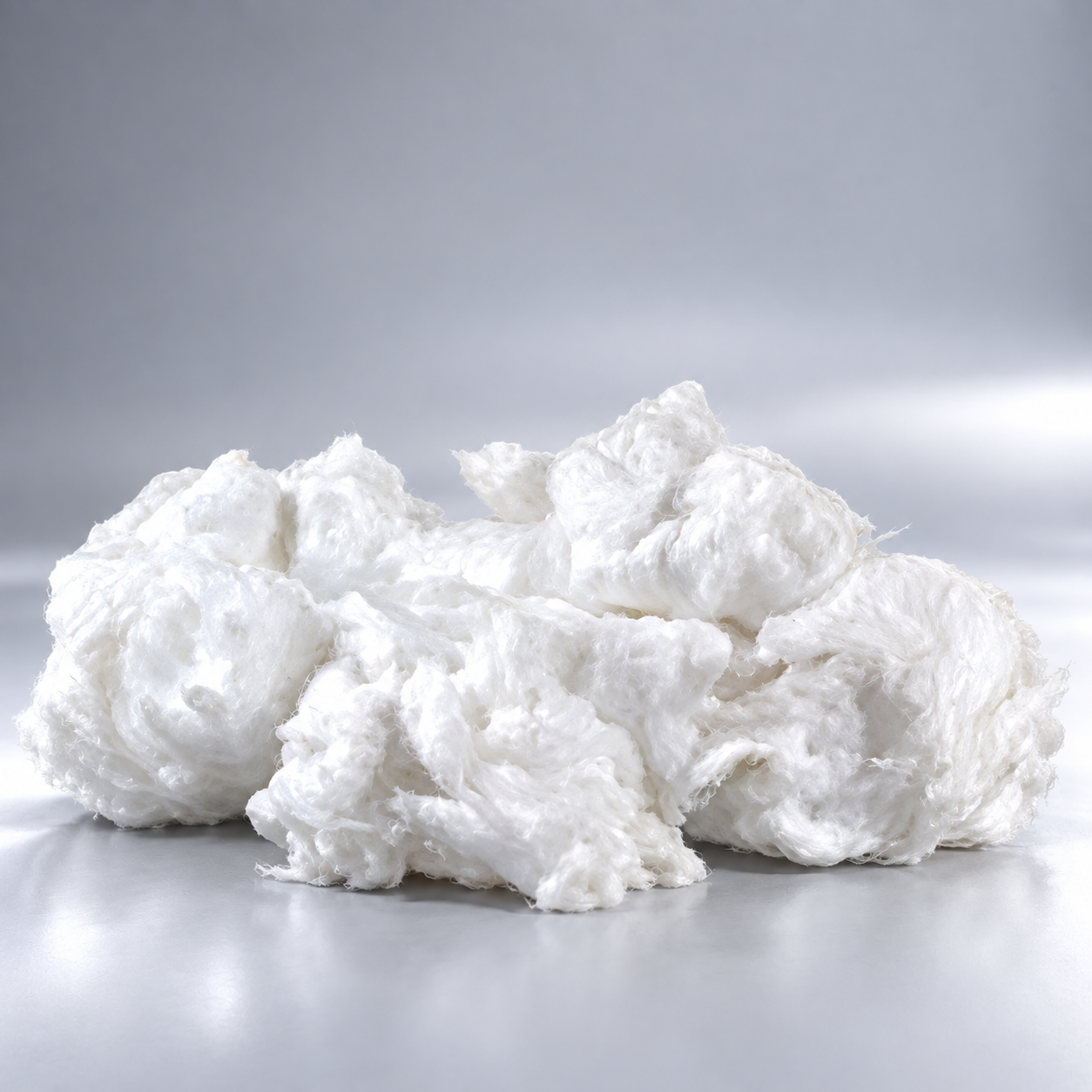
Loose Mineral Wool (Slag Wool)
Mineral wool, sometimes referred to as slag wool, is a highly favored choice for insulation applications thanks to its practical performance benefits. It stands up well to fire, resists dirt, and repels water effectively.
Additionally, mineral wool offers low thermal conductivity and consists of a fibrous structure containing countless tiny air pockets, which contributes to its insulating properties.
| Material | Mineral wool fiber, typically derived from slag or a blend of slag and basalt |
|---|---|
| Form | Loose, nodular fiber — not bonded or bound together |
| Packing | Supplied in bulk bags for loose-fill application |
| Standard Weight | Commonly packed in 40 Kg bags |
| Temperature Tolerance | Withstands sustained exposure up to roughly 750°C |
| Approximate R-Value | Around R-2 to R-3.3 per inch in loose-fill form (lower than batt form due to lower density) |
| Fibre Diameter | Typically in the fine micron range, giving a soft, wool-like texture |
Applications
Advantages
Conforms to Any Shape
because it isn't bonded into a fixed form, it settles naturally into irregular cavities, corners, and obstructions
Fire Resistance
naturally non-combustible, since it's made from mineral rather than organic material, so it doesn't require added fire-retardant chemicals
No Cutting or Fitting Required
can be poured or blown in place, speeding up installation in awkward spaces
Sound Absorption
the entangled fiber structure traps air and dampens noise transmission
Made from Recycled/Byproduct Material
often produced using slag, a byproduct of metal processing, giving it a favorable environmental profile
LEADER IN FIELD OF ENERGY CONSERVATION
with having dedicated team, experience of 30+ years We Delivers More Than Committed